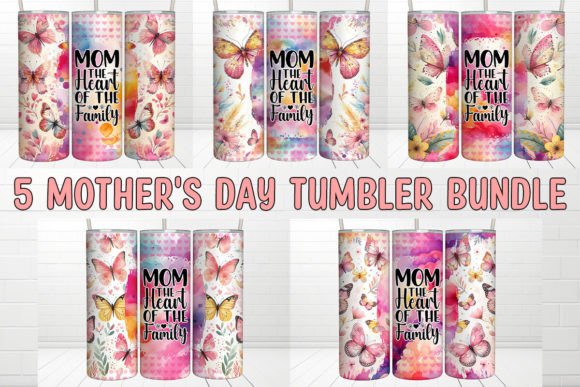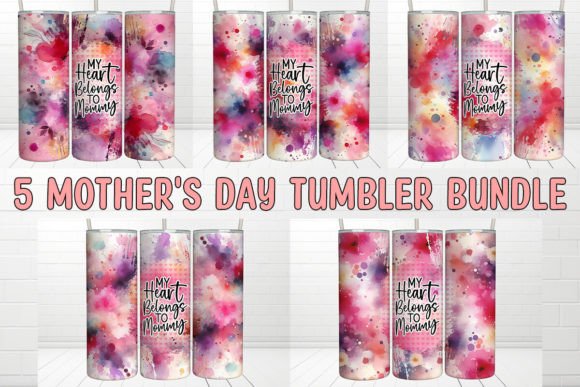
Mother’s Day Tumbler, My Heart Belongs
As a designer who’s stitched hundreds of Mother’s Day projects—from boutique aprons to personalized baby onesies—I opened Mother’s Day Tumbler, My Heart Belongs expecting something sweet and functional. What I found wasn’t just another floral script: it’s a quietly confident design that leans into warmth without leaning too hard on cliché. The phrase “My Heart Belongs” sits centered, soft-serif lettering with gentle curves—no sharp angles, no aggressive embellishments. It feels handwritten but polished, intimate but presentable. That balance matters when you’re stitching for real people who’ll hold, wear, or gift the finished product.
Last week, I used Mother’s Day Tumbler, My Heart Belongs as the focal point on a linen-cotton tea towel for a local gift shop’s spring launch. I paired it with two small heart motifs (not included—added manually) and ran it in a 4.5" hoop. The result? Clean satin-stitched letters held their shape beautifully on the medium-weight fabric, and the overall composition read clearly from three feet away—critical for shelf appeal at craft fairs or Etsy mockups. Customers didn’t just see “a Mother’s Day design”—they paused. Smiled. Said, “That’s *her*.” That kind of resonance is rare in digital embroidery files—and it starts with intentionality in layout and spacing.
Mother’s Day Tumbler, My Heart Belongs works best where emotional clarity meets tactile simplicity. Think: embroidered sweatshirt pockets, cotton tote bags for new moms, linen pillow covers for nursery decor, or even minimalist patches sewn onto denim jackets. Its proportions—9.3″ wide by 8.2″ tall—make it ideal for vertical placements on taller items like tumblers (as intended), but also adaptable for horizontal use on aprons or tea towels when scaled down slightly. Because it’s delivered as PNGs—not vector or embroidery-native files—you’ll need to digitize it yourself or work with a digitizer. That means your stitch quality, thread choice, and stabilizer selection will directly shape how well the sentiment lands.
This isn’t a plug-and-play machine embroidery design. It’s a graphics asset—clean, high-resolution (300 DPI), and thoughtfully sized—but it requires translation into stitch language. For example, the lowercase “y” and “l” in “My Heart Belongs” have subtle curves that could blur if over-digitized with dense fill stitches. On thin fabrics like rayon challis or lightweight knits, those details may collapse without proper cutaway stabilizer. And on dark fabric? Test your thread contrast early: light blush or cream thread reads warmly on navy, but pale yellow can disappear entirely.
I ran a quick black-and-white mockup before stitching—just to check legibility at reduced scale. At 70% size, the text stayed readable on a 3.5" hoop, which opens doors for baby onesie embroidery or cap fronts (though curved surfaces demand careful hooping and possibly tapered file adaptation—good thing the set includes both straight and tapered versions). That flexibility is smart. Not every tumbler is perfectly cylindrical; not every tote handle placement allows for full-height centering. Having options lets you match the design to the product—not the other way around.
Where Mother’s Day Tumbler, My Heart Belongs shines most is in handmade product storytelling. It doesn’t shout. It invites. That makes it strong for Etsy sellers building a cohesive brand voice—think earth-toned packaging, hand-lettered tags, and soft photography. It also holds up well in printable mockups: the clean edges and consistent DPI mean your digital previews look trustworthy, not pixelated. For craft business owners, that consistency builds customer trust before the first stitch is even made.
But let’s talk caution zones. Avoid using this design on highly textured fabrics like bouclé or thick terry cloth without adjusting stitch density—it’ll get lost in the pile. Skip it for stretchy performance knits unless you’re using a high-quality tear-away + cutaway combo and reducing pull compensation. And never skip testing on scrap fabric first: run it at your intended size, with your chosen thread and stabilizer, then wash and dry the sample. Does the lettering pucker? Do corners lift? Does the heart motif (if added separately) align cleanly? These aren’t hypotheticals—they’re the difference between a $48 boutique item and a return request.
For commercial embroidery projects—say, stitching 50 matching aprons for a mom-owned café—the design’s balanced weight and moderate width help maintain rhythm across multiple pieces. No awkward gaps. No cramped crowding. That professionalism matters when clients see your portfolio or unbox their order. Likewise, for holiday embroidery collections, Mother’s Day Tumbler, My Heart Belongs pairs naturally with neutral palettes and quiet botanical accents—not competing, just complementing.
One note for digital product sellers: since this is a graphics file—not an embroidery file—you’re responsible for confirming licensing terms before reselling digitized versions or including it in subscription bundles. Welcome Dear provides PNGs only; they don’t specify commercial redistribution rights. Always verify before bundling it into your own craft business toolkit.
Final thoughts? Mother’s Day Tumbler, My Heart Belongs earns its place in my working library because it respects the craft. It assumes you know how to choose stabilizer, adjust tension, and read fabric behavior—and gives you room to do it well. It’s not flashy. It’s not trendy. But stitched thoughtfully, on the right base, with care in color and construction, it becomes more than decoration. It becomes a quiet affirmation—stitched, held, and loved.
- Always test Mother’s Day Tumbler, My Heart Belongs on scrap fabric before committing to client or inventory work
- Check thread color contrast on both light and dark fabric backgrounds
- Review stitch density if digitizing for baby embroidery or delicate fabrics
- Confirm hoop size compatibility—especially for curved surfaces like caps or tumblers
- Inspect small letter details at actual stitch scale—don’t rely solely on screen preview
- Use proper stabilizer: cutaway for knits, tear-away for stable wovens, mesh for lightweight linens
- Verify licensing before selling finished products or bundled digital embroidery files