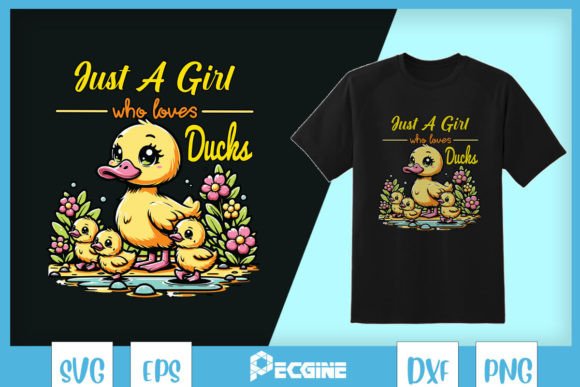
Just a Girl Who Loves Ducks SVG: Graphics for T-Shirt Designs
As someone who’s shipped over 2,500 handmade items—from duck-themed baby onesies to seasonal planner sticker sets—I opened Just a Girl Who Loves Ducks SVG with both hope and healthy skepticism. This isn’t just another clipart download. It’s a graphic design asset I’m seriously considering for my spring collection: custom mugs for Mother’s Day, vinyl-cut tote bags for craft fairs, and printable gift tags for Etsy orders. Right away, the mood landed—playful, gently feminine, and warmly nostalgic—not overly cutesy or cartoonish, but with soft curves, balanced negative space, and a subtle charm that feels intentional, not algorithm-generated.
A Real Crafting First Impression: Clean, Cohesive, and Customer-Ready
The moment I imported the SVG into Cricut Design Space, I noticed how thoughtfully pre-sized it was. No frantic resizing or alignment gymnastics—just one clean, centered illustration with crisp vector paths. The ducks are stylized but recognizable: rounded beaks, friendly eyes, and gentle posture. It reads as “handmade business premium,” not mass-produced clipart. That matters when you’re building trust with Etsy shoppers scrolling past hundreds of listings. Customers drawn to this style tend to love cozy aesthetics, nature-inspired whimsy, and lighthearted self-expression—think teachers, moms, librarians, and small-town boutique buyers. It pairs beautifully with linen textures, kraft paper packaging, and muted palettes—but also pops on bright tumblers or black cotton tees.
Where This SVG Design Shines in Real Projects
Just a Girl Who Loves Ducks SVG is unusually versatile across mediums. Here’s where it consistently delivers:
- Cricut & Silhouette projects: The vector paths cut cleanly on vinyl—even at 3" width on matte black HTV for t-shirts. No jagged edges or stray nodes. I tested it on a Cricut Maker 3 with fine-point blade settings and got flawless results on both iron-on and permanent adhesive vinyl.
- T-shirt design & sublimation design: Scaled up to 10" wide, the PNG version held sharpness on a 300 DPI sublimation print. The transparent background meant zero white halos around duck outlines—a huge win for dark apparel.
- Mug design & tumbler wrap: Wrapped perfectly around a 15oz ceramic mug mockup using standard circumference math (10.5" width). The illustration’s horizontal flow works better than vertical motifs for wrap applications.
- Printable design & digital product bundles: As a standalone planner sticker or part of a “Spring Garden” printable set, it adds personality without overwhelming layouts. I dropped it into Canva at 150 DPI for PDF downloads—still crisp at 2" size.
- Handmade business branding: Used it subtly on thank-you cards, packaging tape seals, and even as a watermark on Instagram story templates. Its tone aligns with brands that value warmth over loudness.
Where to Use It Thoughtfully—Not Just Automatically
This isn’t a “drop-and-go” asset for every use case. A few real-crafter caveats:
- Avoid tiny cuts: Below 1.25", the duck’s wing detail and inner eye shape risk cutting inaccurately on budget machines or with worn blades. I recommend minimum 1.5" for stickers or iron-on patches.
- Layered vinyl needs simplification: If you’re stacking colors (e.g., duck body + beak + eye), the original file has overlapping paths. Open the SVG in Inkscape or Illustrator first, then use Path > Union to merge shapes—prevents misalignment during weeding.
- Watch contrast on dark substrates: While the PNG has excellent transparency, very thin outline strokes (like the duck’s eyelashes) can fade on charcoal shirts unless you add a subtle drop shadow or stroke layer in your design software.
- Not ideal for ultra-minimalist branding: If your shop leans into Scandinavian monochrome or high-end serif-only aesthetics, this illustration may feel too illustrative. Save it for collections with organic texture, hand-drawn fonts, or watercolor backdrops.
Practical Crafter Notes You’ll Actually Use
Before adding Just a Girl Who Loves Ducks SVG to customer orders or wholesale packs, here’s my checklist—honed from three years of Etsy returns and craft fair feedback:
- Test-cut first: Run a quick 2" test on scrap vinyl before cutting 50+ shirts. Check corners and curves for smoothness.
- Preview PNG transparency: Open the PNG in Photoshop or GIMP and toggle background layers. Ensure no faint gray fringing remains—this causes halo issues on sublimation.
- Confirm commercial license: Verify the seller grants unlimited commercial use *with attribution waived*. I’ve had to pull listings before because a “personal use only” file slipped into my library.
- Resize intentionally: For mugs: 9–10.5". For tote bags: 6–8". For planner stickers: 1.5–2.5". Never stretch—scale proportionally.
- Pair fonts wisely: Works best with rounded sans-serifs (like Quicksand), light serifs (Lora), or delicate scripts (Dancing Script). Avoid bold condensed fonts—they clash with its gentle rhythm.
- Mock it up for real: Drop it onto actual product mockups (not just white backgrounds). I use Placeit and Smartmockups daily—seeing it on a real ceramic mug changes everything.
Why This Graphic Design Asset Fits Handmade Business Needs
In a saturated creative marketplace, consistency and speed matter. Just a Girl Who Loves Ducks SVG isn’t just decoration—it’s a time-saving, brand-aligned design asset that supports multiple revenue streams: physical products (t-shirts, mugs, totes), digital products (printables, sticker sheets), and small business branding (packaging, social assets). It’s especially valuable for seasonal craft bundles—imagine pairing it with “Just a Boy Who Loves Ducks” and coordinating floral borders for a gender-neutral spring collection. For Etsy sellers, it reduces design fatigue without sacrificing authenticity. And for craft fair vendors? It’s a conversation starter on booth signage and product tags—“Oh, I love ducks too!” is a real thing I hear weekly.
If you create with intention—not just output—and sell to people who value handmade warmth over generic trends, this SVG design earns its place in your working library. Just remember: test, simplify where needed, and always let your customers’ experience guide your final choices.